OnTech · Mobile app
OnTech Pro: letting skilled technicians work on their own terms
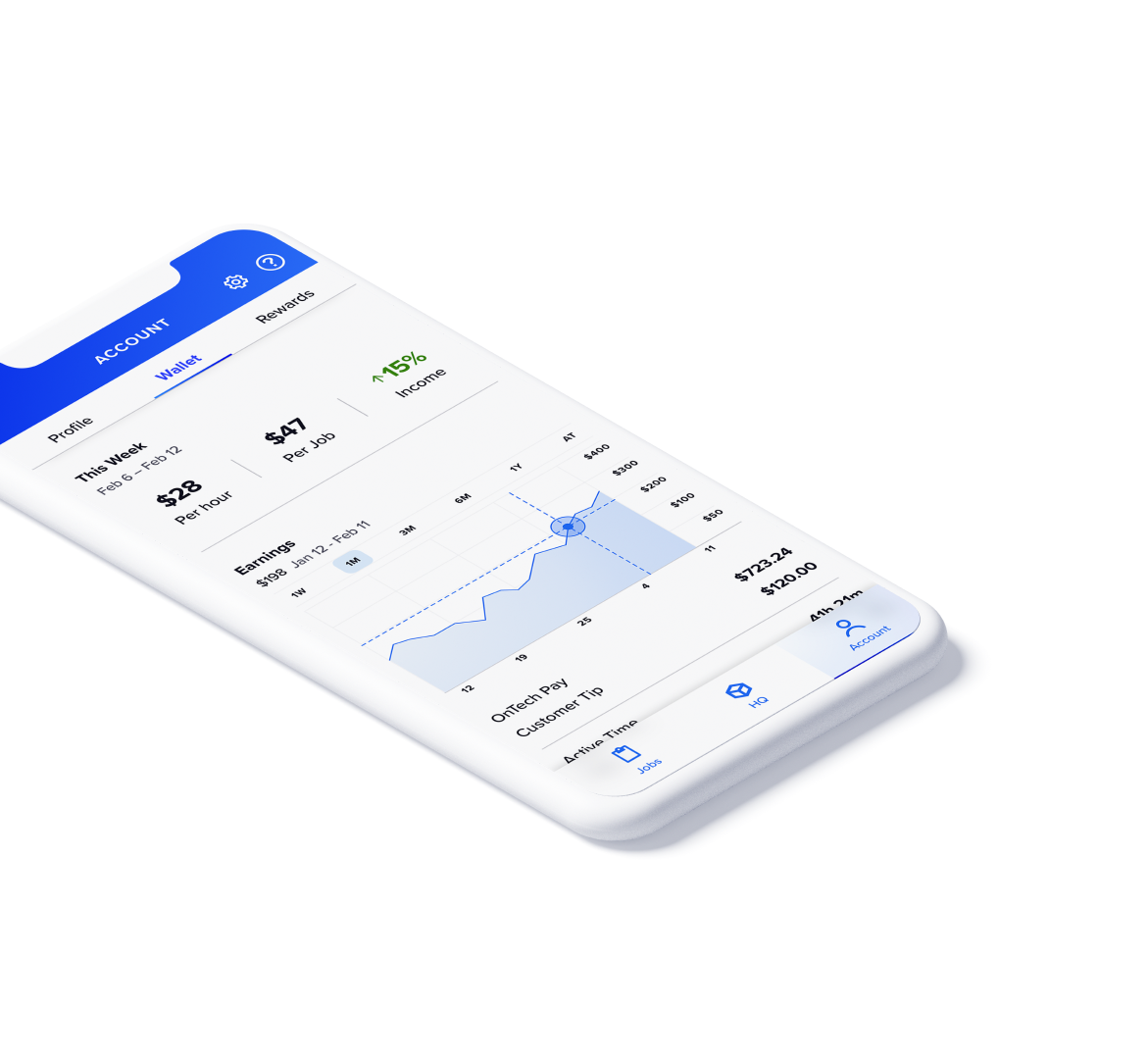
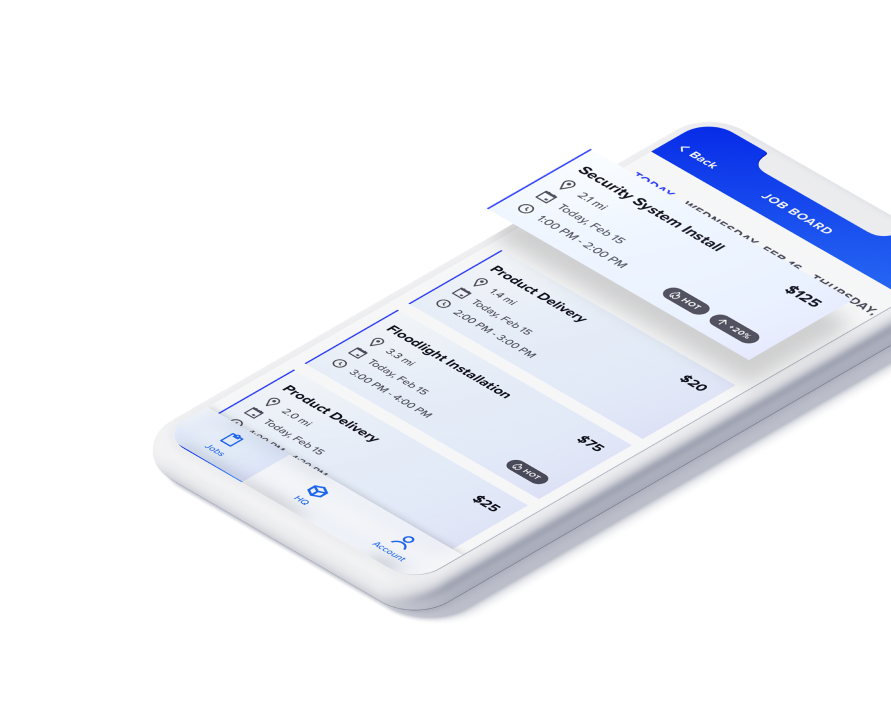
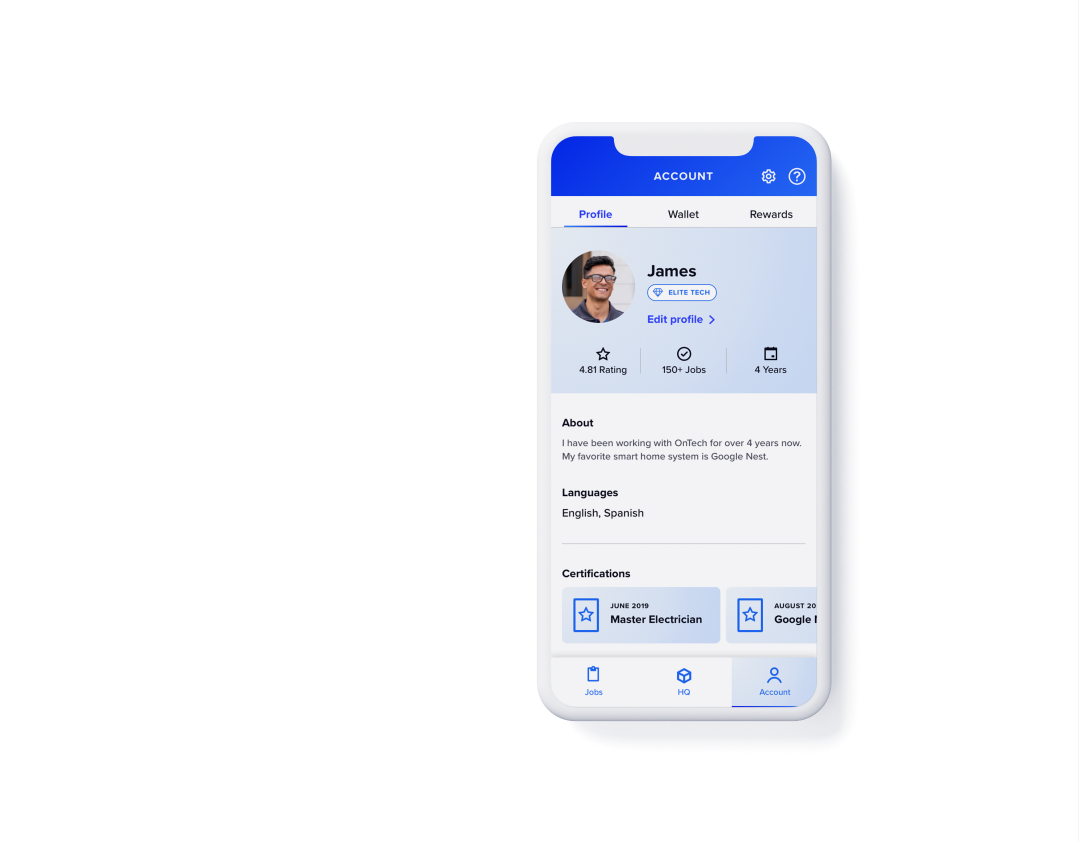
OnTech Pro is a gig-economy app for electricians, smart home technicians and delivery drivers. Experts control their own schedule, work where they want and get paid instantly.
My role
UX Research Manager
Team
Product, UX research, UX/UI design, copy and program management
Timeline
2022 to 2023
Outcome
Job flow validated with A/B and usability testing
01 · Context
The challenge
Partners wanted their full product line installed
Partners like Google wanted OnTech to install everything they sell. Some products require specialized skills and certifications, and electrical skills were limited in the existing workforce.
Some jobs didn’t need a full technician
Republic Wireless needed phone delivery powered by OnTech. Sending a highly trained tech with a ladder and a vehicle to deliver a device isn’t profitable.
Hiring is hard. Retaining is harder.
Skilled technicians want more flexibility, which created an opportunity for a win-win relationship with techs around the country.
02 · Research
How we learned
We worked in 2-week sprints with research and design sharing responsibility, building and prioritizing a backlog as research came in.
Competitive analysis
7 direct and indirect competitors
Survey
200 gig workers, 15 questions on motivation, pay and schedule
Card sorting
15 participants from a lookalike audience
Stakeholder interviews surfaced four focus areas: a structured in-home job process, transparent incentives, smarter inventory and a one-minute sign-up with ten minutes of training.
03 · Insights
Flows and information architecture
We mapped current flows, found optimized paths and validated them with wireframes and prototypes.
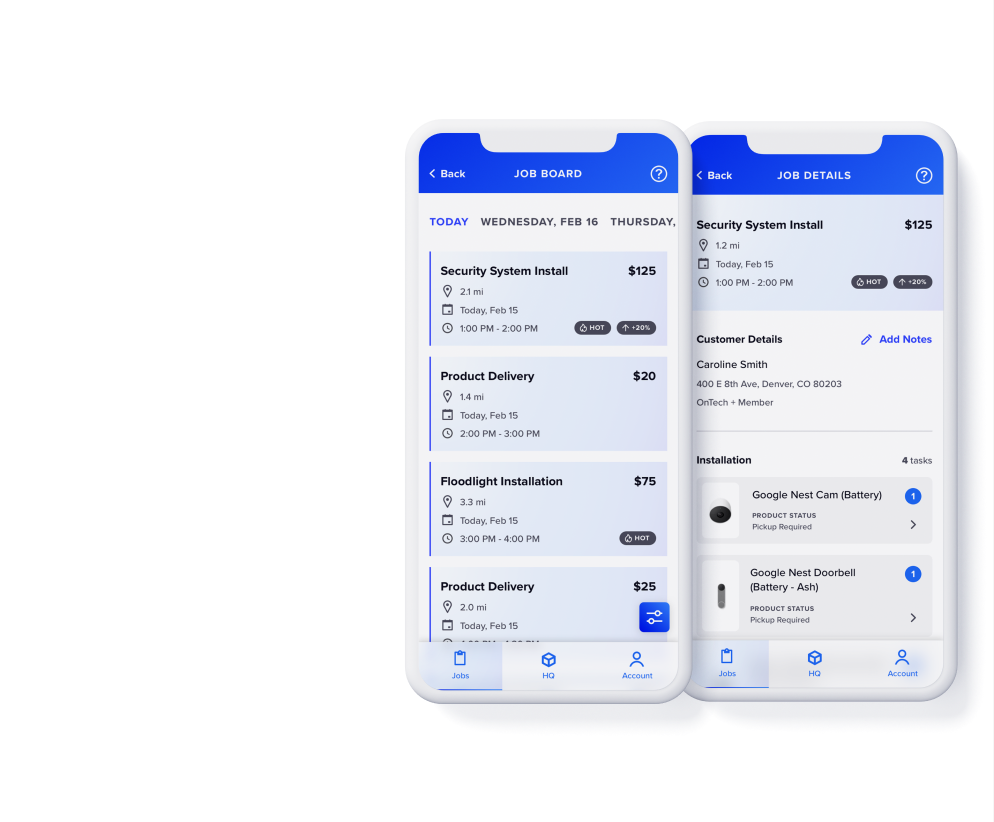
Job details like time, location and pay had to fit on one card. Surveys, card sorting, usability tests and A/B tests gave that information a hierarchy that matched how gig workers decide.
04 · Design
Interface
OnTech is part of DISH’s family of brands, so we built on Campfire, the enterprise design system. We kept its type scale, interaction color and functional components, then adapted the more expressive pieces to fit an alternate labor experience.